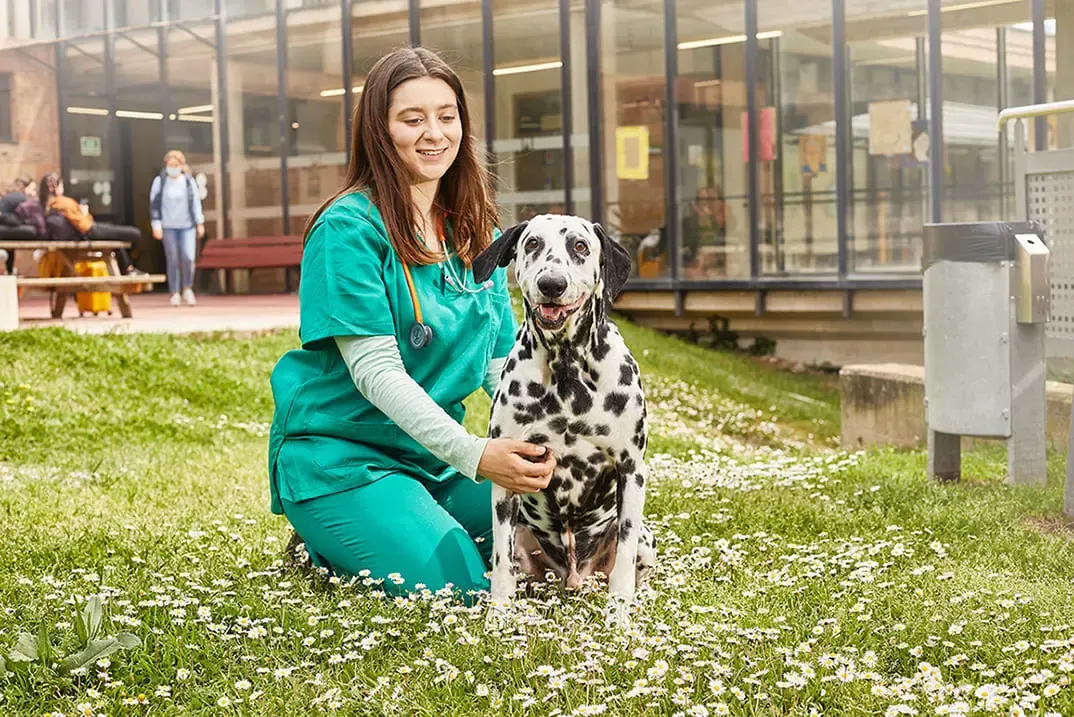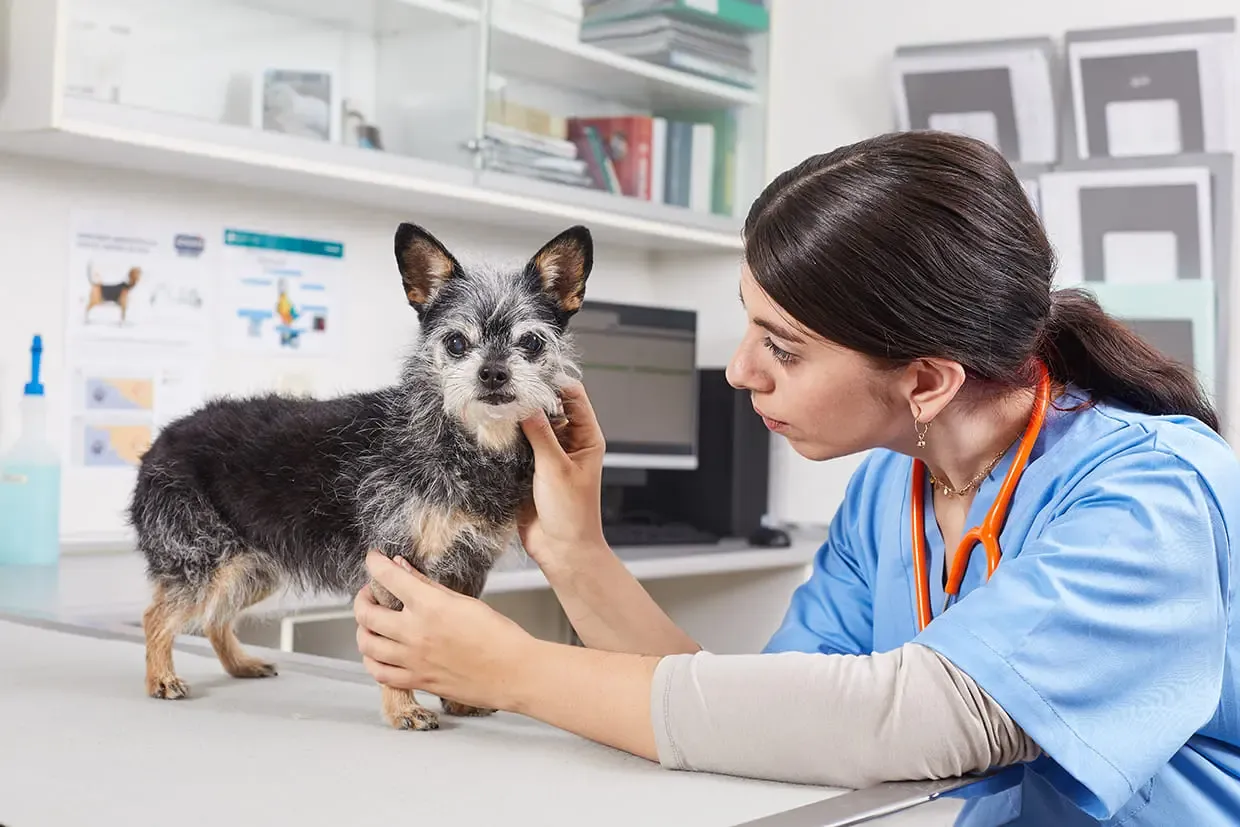
Immunonutrition in puppies is emerging as a key precision nutrition strategy during weaning, one of the most critical stages of canine paediatric development.
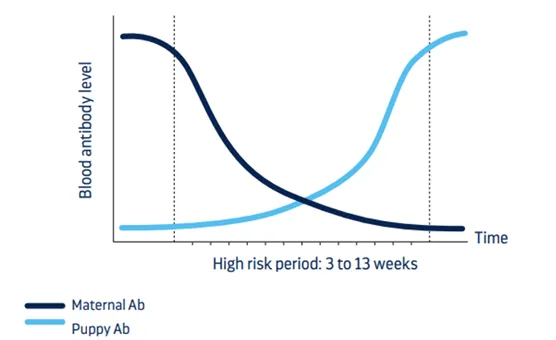
A critical period of vulnerability occurs during this phase: the passive immunity transferred by the mother via canine colostrum begins to wane, whilst the puppy’s own immune system has not yet reached the necessary level of maturity.
Faced with this challenge, strengthening a puppy’s immune system with advanced nutrition helps to bolster its active defences and protect the integrity of its intestinal mucosa when it needs it most.
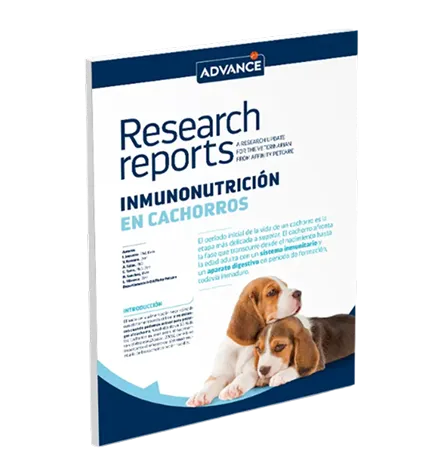
Related resource
Download the full Research Report containing the scientific evidence on the benefits of immunonutrition for puppies.
Immune development: What is the window of risk in puppies, and when does it occur?
Passive maternal immunity, transferred mainly via colostrum (effective absorption only during the first 24 hours of life), provides protection for the puppy for 1–2 months. Its gradual decline coincides with the slower rise in the body’s own active immunity, creating a high-risk period between weeks 3 and 13. Dietary supplementation at this stage boosts the puppy’s antibody response and strengthens its overall protection.
Why is it necessary to supplement a puppy’s diet with nucleotides during weaning?
Dietary dependence: tissues with a high turnover rate (intestinal mucosa, haematopoietic precursors, leukocytes) have limited endogenous synthesis and are dependent on exogenous supply.
Quantitative evidence by litter: the supply of nucleotides via maternal milk decreases progressively as the number of puppies per litter increases. Food supplemented with nucleotides may therefore help to provide an additional supply of nucleotides regardless of the size of the litter.
How does immunonutrition with nucleotides in puppies influence the response to vaccines?
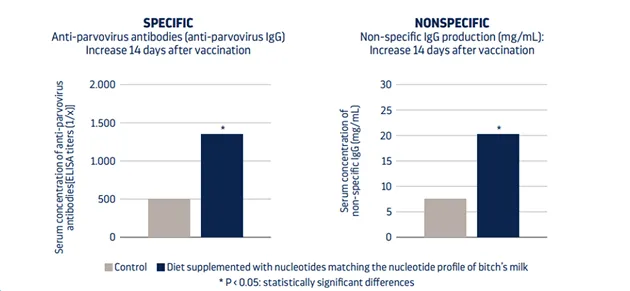
Enhancement of humoral immunity: according to Romano et al. (2007), 14 days after the first vaccination, puppies given a diet supplemented with nucleotides with a profile similar to that of maternal milk showed significantly higher non-specific serum IgG levels and anti-parvovirus antibody titres than those in the control group.
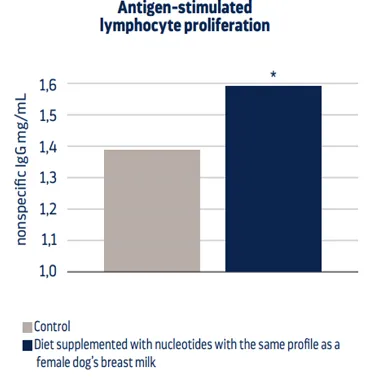
Enhancement of cellular immunity: according to Romano et al. (2007), the proliferation of antigen-stimulated lymphocytes was also significantly higher in the puppies given nucleotide supplements compared with the control group.
What is the solution for this window of risk?
Nutrition can play an important role in seeing puppies through the stage when their immune system is at its most vulnerable. ADVANCE Active Defense contains a nucleotide profile tailored to the natural composition of maternal milk.
This formulation not only directly addresses the dietary deficiencies commonly experienced during weaning, but also significantly boosts the post-vaccination immune response – both humoral and cellular – helping the puppy’s body to develop its defences more effectively at the very time it needs them most.
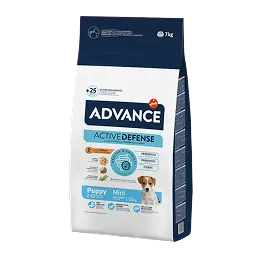
Advance Active Defense Puppy
An advanced nutritional solution containing nucleotides, formulated to optimise immune and intestinal development during a puppy’s weaning period.
Discover its key benefits here:
Frequently Asked Questions
What is the difference between dietary nucleotides and endogenous synthesis in puppies?
Endogenous nucleotide synthesis has a very high metabolic cost and is insufficient in rapidly dividing tissues. For this reason, supplementing the diet with nucleotides is particularly important during the early stages of development in puppies and kittens. Dietary (exogenous) nucleotides are considered highly beneficial during weaning, helping to support immune development.
How do synbiotics and nucleotides interact to support a puppy’s health? They work in synergy: whilst nucleotides and immunoglobulins strengthen the structure of the villi and stimulate the body’s defences, synbiotics (live probiotics + prebiotics) balance the gut microbiota, reducing inflammatory markers and faecal ammonia.
How long before the first vaccination should nucleotide supplementation begin?
Ideally, it should be started right at the beginning of weaning (at around 3–4 weeks of age). As a result, the immune tissues receive the necessary exogenous supply of nucleotides to reach their peak humoral response (IgG) 14 days after the first dose of the vaccine.
Bibliography
- Pereira K.H.N.P., da Fuchs K.M., Corrêa J.V., Chiacchio S.B., Lourenço M.L.G. Neonatology: Topics on Puppies and Kittens Neonatal Management to Improve Neonatal Outcome. Animals. 2022; 12:3426. doi: 10.3390/ani12233426.
- Chastant-Maillard S., Aggouni C., Albaret A., Fournier A., Mila H. Canine and feline colostrum. Reprod. Dom. Anim. 2017; 52:148-152. doi: 10.1111/rda.12830.
- Yu V. Scientific rationale and benefits of nucleotide supplementation of infant formula. J. Paediatr. Child Health. 2002; 38:543-549. doi: 10.1046/j.1440-1754.2002.00056.x
- Hess, J.R. and Greenberg, N.A. The Role of Nucleotides in the Immune and Gastrointestinal Systems. Nutr. Clin. Pract. 2012; 27:281-294. doi: 10.1177/0884533611434933.
- Ding T., Song. G., Liu X., Xu M., Li Y. Nucleotides as optimal candidates for essential nutrients in living organisms: A review. J. Funct. Foods. 2021; 82:104498. doi: 10.1016/j.jff.2021.104498.
- Schlimme E., Martin D., Meisel H. Nucleosides and nucleotides: natural bioactive substances in milk and colostrum. Br. J. Nutr. 2000; 84(S1):59-68. doi: 10.1017/S0007114500002269.
- Gutiérrez-Castrellón P., Mora-Magaña I., Díaz-García L., Jiménez-Gutiérrez C., Ramirez-Mayans J., Solomon-Santibáñez GA. Immune response to nucleotide-supplemented infant formulae: systematic review and meta-analysis. British Journal of Nutrition. 2007; 98(S1):S64-S67. doi: 10.1017/S000711450783296X
- Wang L., Liu J., Lv H., Zhang X., Shen L. Effects of Nucleotides Supplementation of Infant Formulas on Plasma and Erythrocyte Fatty Acid Composition: A Meta-Analysis. PLOS ONE. 2015; 10(6): e0127758. doi: 10.1371/journal.pone.0127758.
- Wang, L., Mu, S., Xu, X. et al. Effects of dietary nucleotide supplementation on growth in infants: a meta-analysis of randomized controlled trials. Eur. J. Nutr. 2019; 58:1213–1221. doi: 10.1007/s00394-018-1640-2.
- Tonini B., Fusi E., Rizzi R., Bontempo V. Nucleotides in canine colostrum and milk at different stages of lactation. Arch. Anim. Nutr. 2010; 64(4):337-341. doi: 10.1080/1745039X.2010.496952.
- Romano V., Martinez-Puig D., Torre C., Iraculis N., Vilaseca L., Chetrit C. Dietary nucleotides improve the immune status of puppies at weaning. J. Anim. Physiol. Anim. Nutr. 2007a; 91:158-162. doi: 10.1111/j.1439-0396.2007.00680_3.x.
- Balan P., Sik-Han K., Moughan PJ. Impact of oral immunoglobulins on animal health—A review. Anim Sci J. 2019; 90:1099–1110. doi: 10.1111/asj.13258
- Vasconcellos R.S., Henríquez L.B.F., Lourenço P.d.S. Spray-Dried Animal Plasma as a Multifaceted Ingredient in Pet Food. Animals. 2023; 13:1773. doi: 10.3390/ani13111773
- Rodriguez C., Blanch F., Romano V., Saborido N., Rodenas J., Polo J. Porcine immunoglobulins survival in the intestinal tract of adult dogs and cats fed dry food kibbles containing spray-dried porcine plasma (SDPP) or porcine immunoglobulin concentrate (PIC). Anim. Feed. Sci. Technol. 2007b; 139(3-4):201-211. doi: 10.1016/j.anifeedsci.2007.01.012.
- Guard BC., Mila H., Steiner JM., Mariani C., Suchodolski JS., et al. Characterization of the fecal microbiome during neonatal and early pediatric development in puppies. PLOS ONE. 2017; 12(4):e0175718. doi: 10.1371/journal.pone.0175718.
- Garrigues Q., Apper E., Chastant S., Mila H. Gut microbiota development in the growing dog: A dynamic process influenced by maternal, environmental and host factors. Front. Vet. Sci. 2022; 9:964649. doi: 10.3389/fvets.2022.964649.
- Félix AP., Netto MVT., Murakami FY., Marcon de Britol CB., de Oliveira SG., Maiorka A. Digestibility and fecal characteristics of dogs fed with Bacillus subtilis in diet. Anim. Prod. 2010; 40(10):2169-2173. doi: 10.1590/S0103-84782010005000166.
- EFSA FEEDAP Panel, Rychen G., Aquilina G., Azimonti G. et al. Scientific Opinion on the safety and efficacy of Calsporin® (Bacillus subtilis DSM 15544) as a feed additive for dogs. EFSA Journal. 2017; 15(4):4760, 9 pp. doi: 10.2903/j.efsa.2017.4760
Authorship
I. Jeusette, PhD, DVM
V. Romano, DVM
A. Salas, PhD; C. Torre, PhD, DVM
N. Sanchez, DVM
L. Vilaseca, DVM
Q(uentin). Garrigues, PhD